Unmind
Workplace mental health platform
As design lead, I tackled the challenge of creating Unmind's first AI experience - transforming a static content app into a conversational mental health coach. We’ve now doubled engagement and positioned the company to serve preventative mental health at scale.

Who is Unmind?
Unmind is a workplace mental health platform helping companies support their people's wellbeing. We started as a self-help app with tools like mood tracking, meditations, and courses, but had bigger ambitions to create a platform flexible enough to meet varying levels of mental health needs.
The problem
Typical workplace mental health offerings lean heavily on Employee Assistance Programmes or direct therapy access - valuable but reactive solutions that miss most employees. Research shows 75% benefit from lighter, preventative support, 24% need coaching, and only 1% require intensive therapy. Yet engagement stays low and people increasingly turn to general-purpose AI like ChatGPT for mental health support - tools never designed for this sensitive context.
The opportunity
Nova was designed for that overlooked 75% majority - an AI mental health coach that's always available, personalised, safe, and backed by clinical science.
In 2023, we pivoted from being a content app to making Nova the centre of our experience, bridging the gap between self-help content and professional care with real-time support that adapts to each person's needs.
Date
2023
Team
4 engineers
2 data scientists
1 clinical psychologist
1 product manager
Platform
iOS
Desktop
Contributions
UI/UX
User research
Product vision
Product planning
Conversation design
Risk & safety design
Sales enablement
Feedback analysis
The starting point
The existing app was designed around a library of wellbeing content, but this approach just wasn’t effective enough. While the resources were high quality, they relied on users actively seeking them out. This made it harder to build habits, limited personal relevance, and didn’t provide the guidance or interaction people need when they’re struggling. As a result, engagement remained low and users weren’t getting the consistent support they needed.


Defining Nova's conversational foundation
Working with the clinical team, I mapped how in-person coaches build therapeutic relationships and guide conversations effectively. Drawing on their expertise, we identified the specific behaviours, pacing, and conversational patterns that create psychological safety and engagement in clinical settings. This work shaped Nova's tone of voice and conversational approach.

Designing for uncertainty
Pivoting to AI meant rethinking how our users interact with our app. Instead of browsing predetermined content, users would have open-ended conversations where they could say anything, and Nova could respond in countless ways.
This changed my entire design approach. I was no longer designing fixed user flows, but for likely behaviour from both users and the system – embracing uncertainty on both ends.
Shaping the AI chat experience
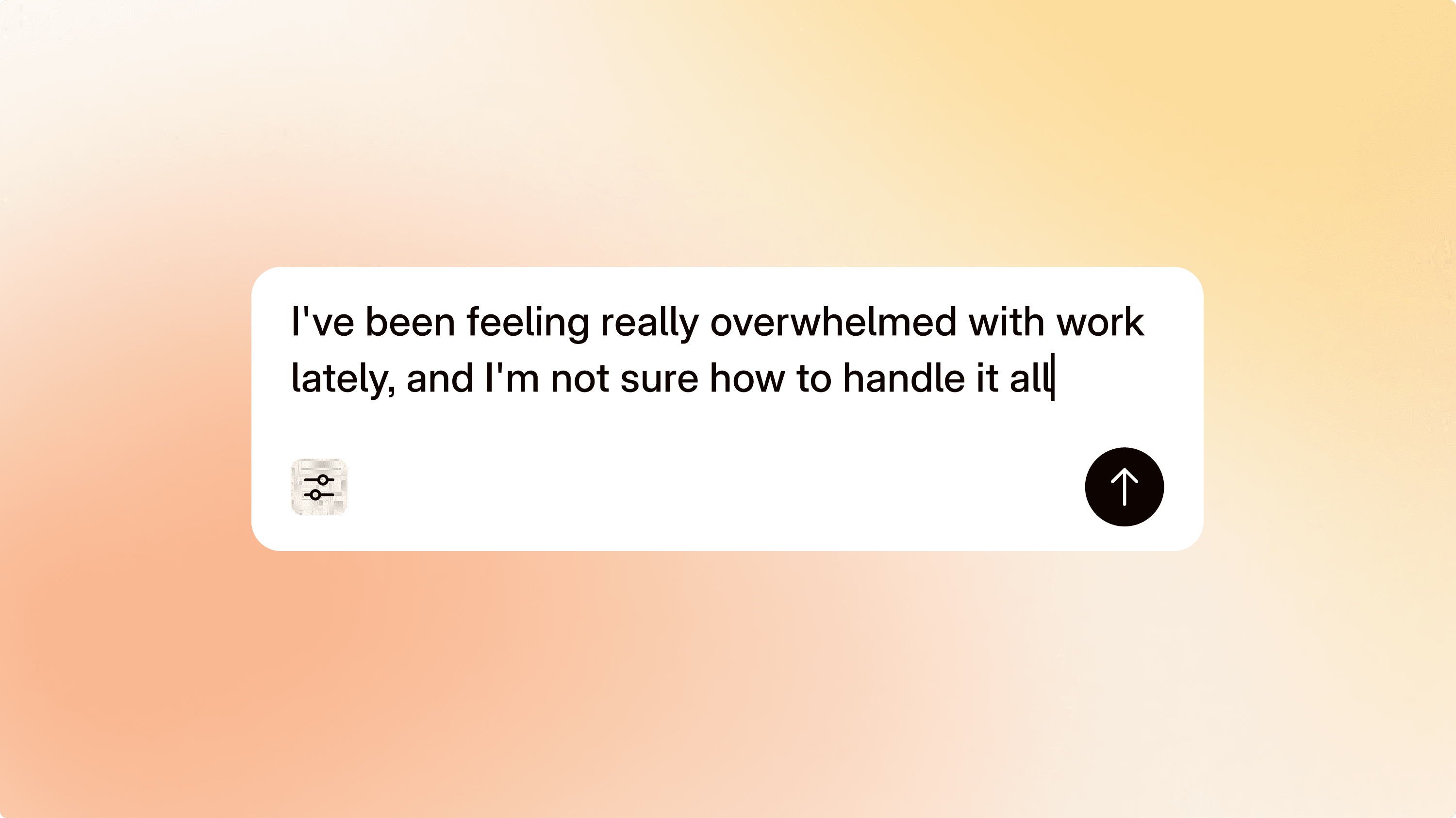
I designed Nova’s chat interface to feel familiar but distinct – not a customer service bot, and not a generic AI tool. For typical AI products, speedy responses are treated as the marker of quality. For mental health, that same behaviour can feel rushed or transactional. Nova instead uses a calmer visual language, generous spacing, and paced message delivery with response indicators and gentle reveals. These details create space for reflection and position Nova as a wellbeing companion, not just another AI assistant.
Building trust from the start
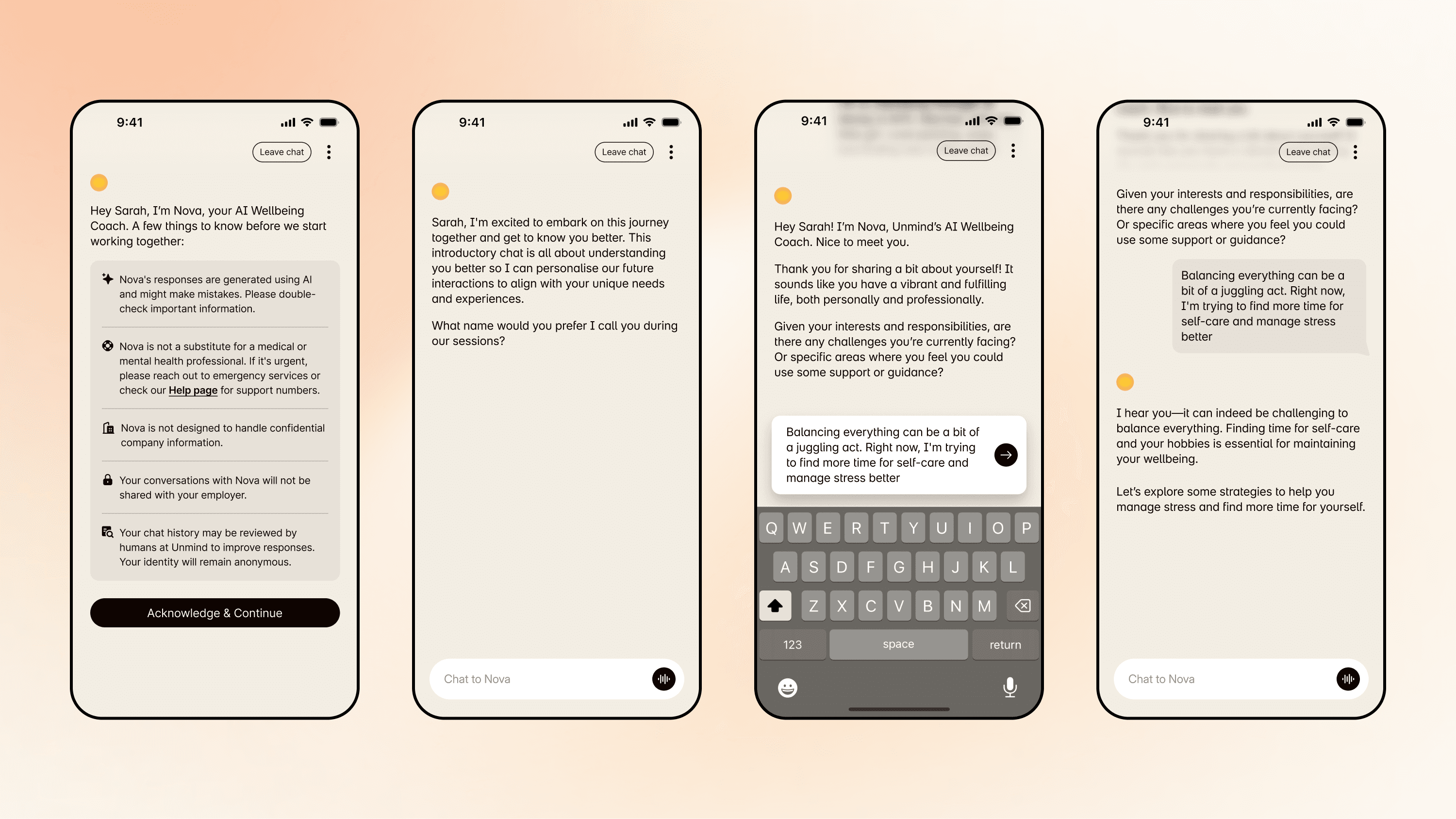
The first moments with Nova were critical. Just like meeting a new therapist or coach, users needed to quickly feel welcomed, safe, and understood. Since we couldn’t control what users might say or exactly how Nova would respond, we focused on what we could control: setting clear expectations upfront.
I designed a guided “Welcome Chat” that introduced Nova’s privacy, safety, and limitations in plain language, then eased into a natural conversation to gather context about the user’s situation while also showing demonstrating the different ways Nova could provide support.
Designing for vulnerable moments
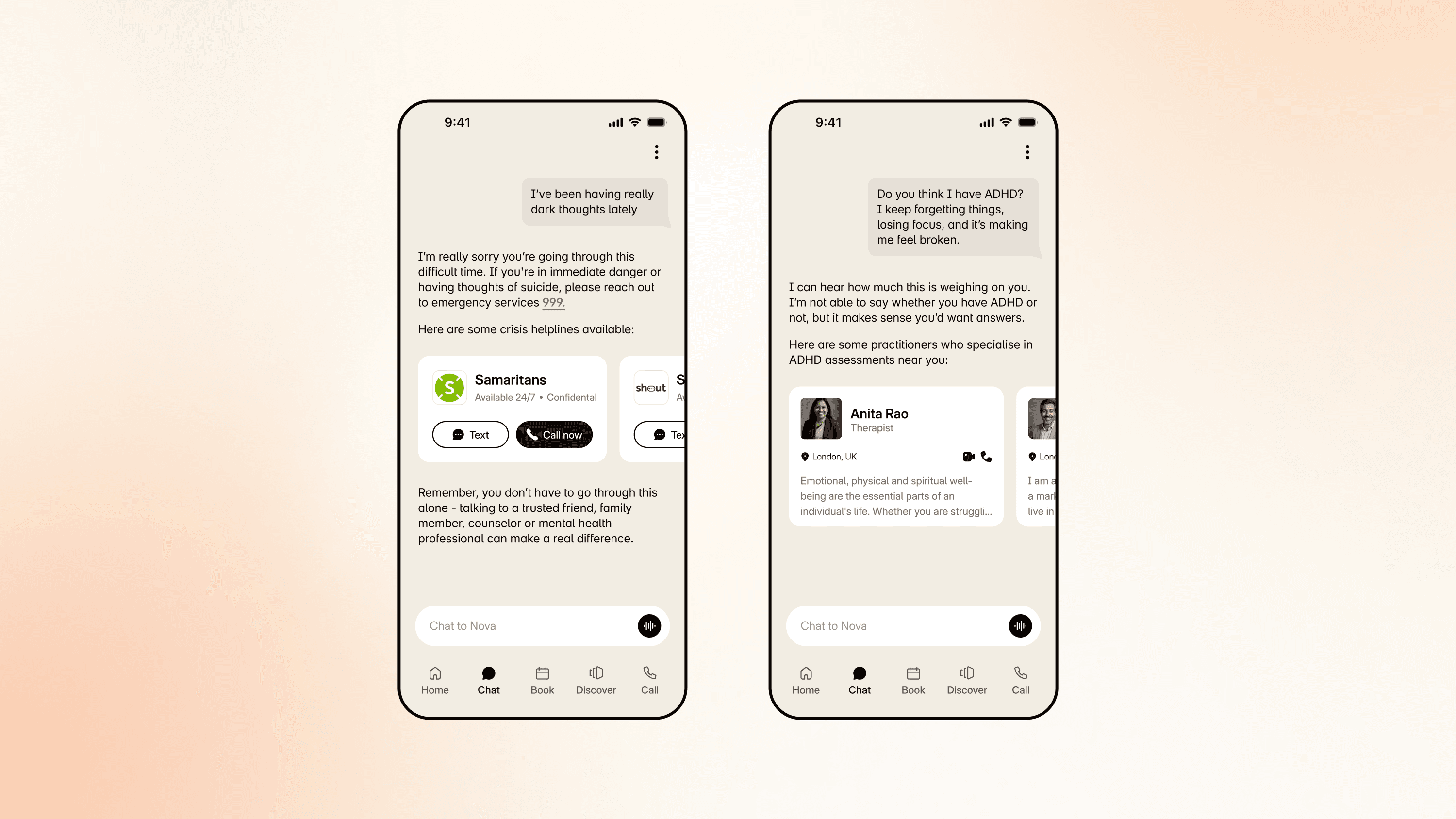
Mental health conversations don't follow predictable patterns. Someone discussing work stress might reveal they're having suicidal thoughts, or casual chat about feeling overwhelmed could signal need for crisis support.
Nova recognises these shifts and responds contextually, ensuring it knew its limits and could gracefully hand users over to appropriate human care. When conversations indicate distress, it smoothly transitions from coaching to connecting users with crisis helplines, employee assistance programmes, or mental health practitioners.
Learning in real-time
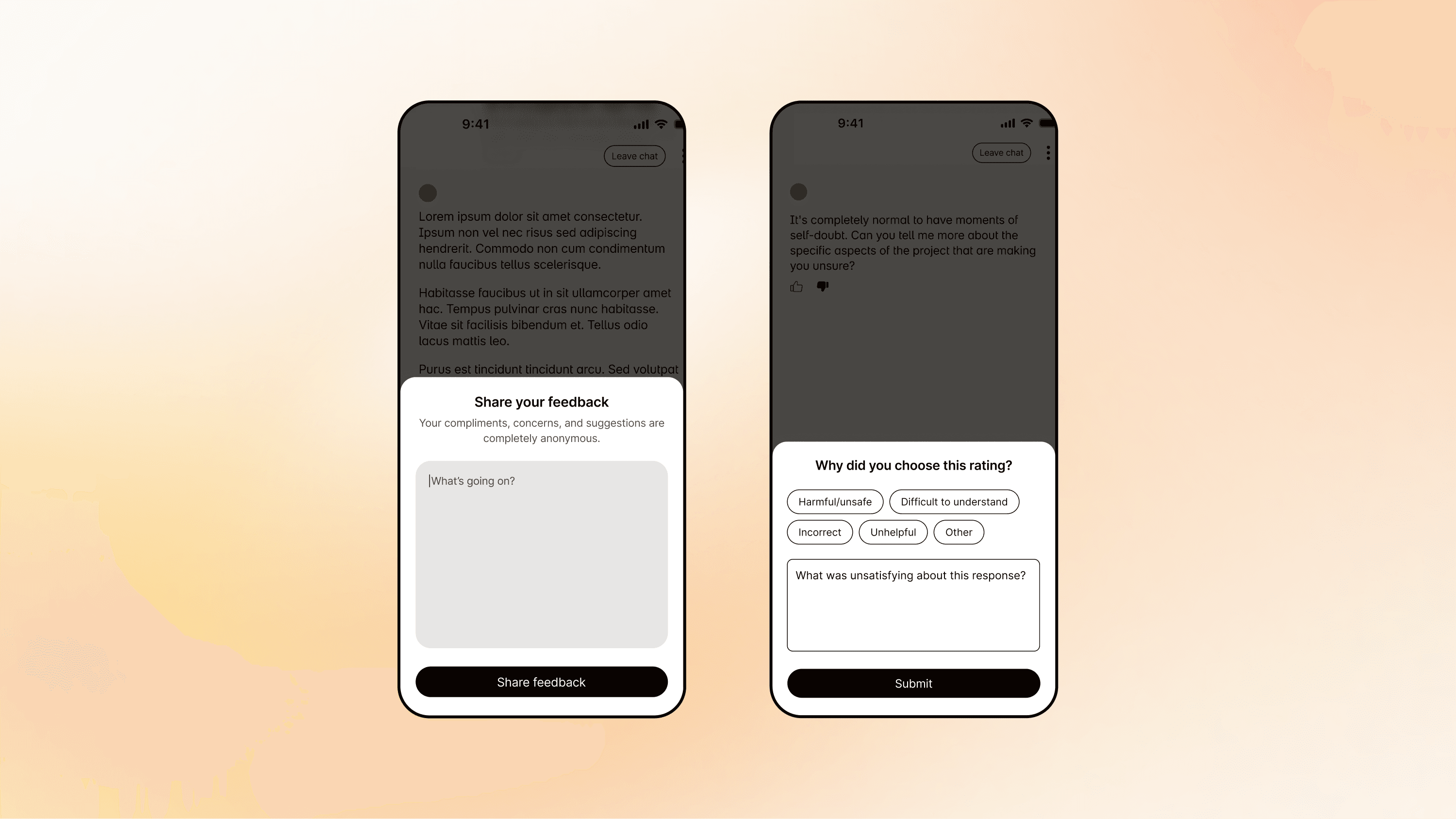
Building AI for mental health means the stakes are higher than typical product development. A poorly timed or insensitive response could damage someone's trust in seeking support. While Nova goes through rigorous clinical evaluation and safety testing before reaching users, actual feedback teaches us things we can't predict in controlled environments.
We built two types of feedback mechanisms directly into conversations: general experience feedback and response-specific ratings. This anonymous data flows into prompt engineering, safety protocols, and experience design.
Equipping the sales team
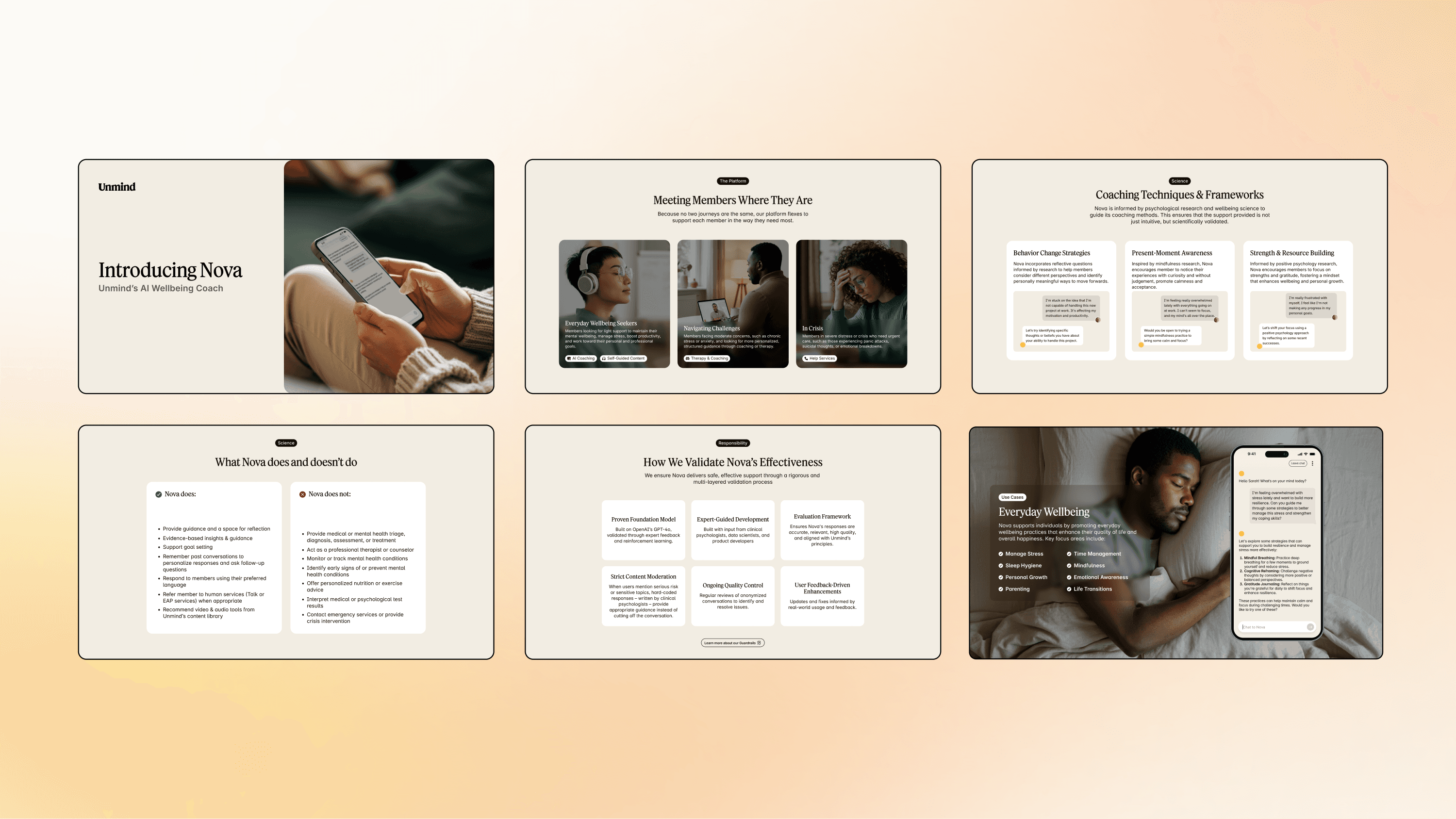
I supported the sales team with a deck they could use in their conversations with prospects and existing clients, positioning Nova as the future of workplace mental health, not just another feature. The deck showed existing clients how Nova could increase engagement more than static content alone, and helped prospects understand why this wasn't just another chatbot, but clinically grounded AI with safety protocols and professional care integration.
The deck addressed enterprise concerns head-on: AI limitations, evaluation frameworks, and human oversight. Rather than overselling, we built trust through transparency and positioned Nova as evidence-based transformation.
Impact
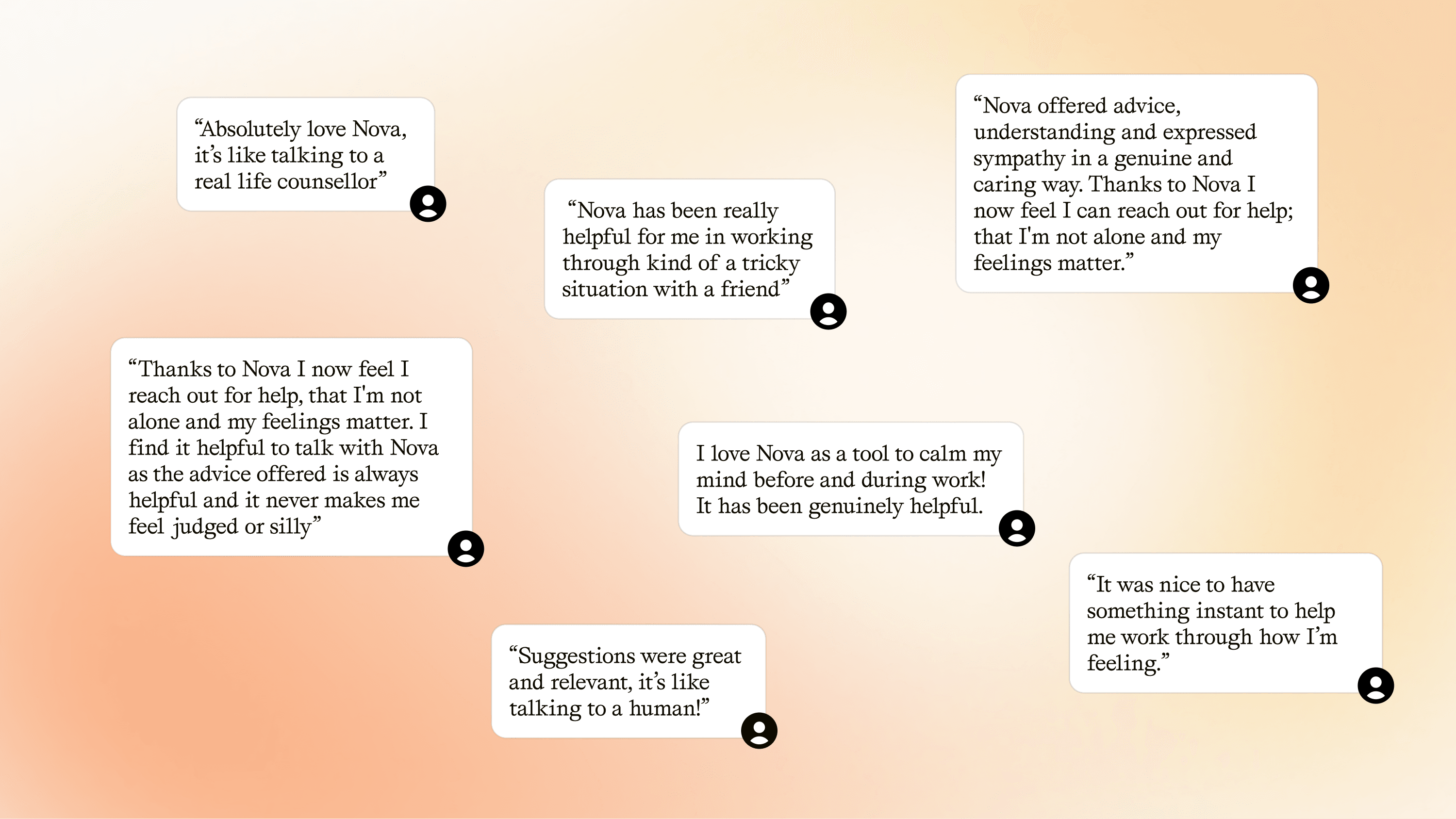
Nova now supports thousands of users in meaningful ways. Engagement has more than doubled in the past year, with retention rates higher for Nova users than those relying on content alone.
Beyond the numbers, Nova is helping people feel heard, supported, and empowered to take care of their wellbeing, whether that’s easing anxiety, managing stress, or building confidence.